
Posted on Tuesday 18th of November, 2014


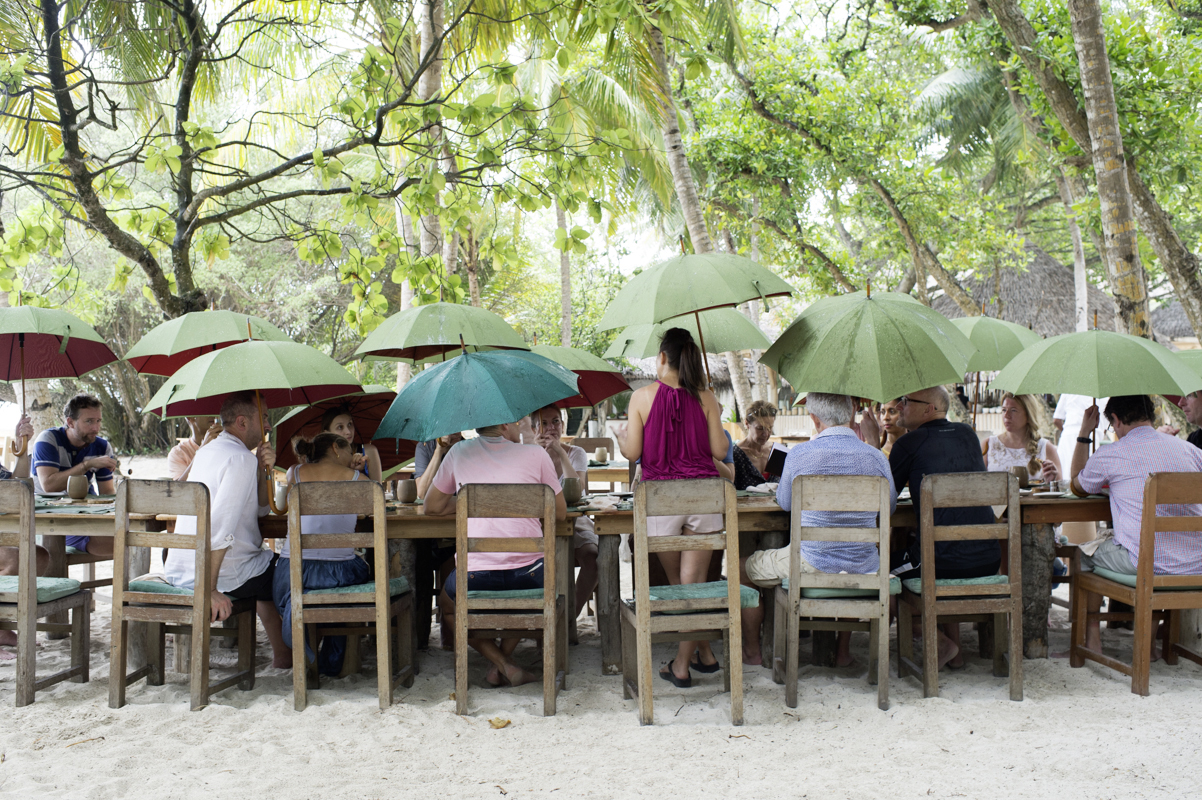
Rain during a break out session at the SLOW LIFE Symposium
The third and final day of the SLOW LIFE symposium 2014, was devoted to debating projections for the future of philanthropy and committing to clear post event actions.
The official dictionary definition of philanthropy means “love of humanity” and the “caring, nourishing, developing and enhancing of what it is to be human”. This applies to both the benefactors’ by identifying and exercising their values in giving and volunteering, and the beneficiaries’, by gaining in some way. So why, when this seems to be a mutually beneficial arrangement, is the world of philanthropy fraught with frustration and differing opinion?
Peter Wheeler, Executive Vice President of the Nature Conservancy, chaired a lively discussion on the future of philanthropy, and the nature and scale of problems the ecological world faces today. The low percentage of total philanthropic dollars invested in environmental or climate causes was highlighted as a key issue by the first speaker invited to the floor, Jamie Arbib, a venture Investor and founder of Tellus Mater. He outlined how philanthropy today tends to focus on singular issues within three sectors of society: government, citizens and business, and fails to focus on the environment, which encompasses all of these. He told the attendees that this approach has to shift moving forward: “The role of philanthropy is to break down silos. Too often we focus on one issue but we must start to bear the bigger picture in mind.”
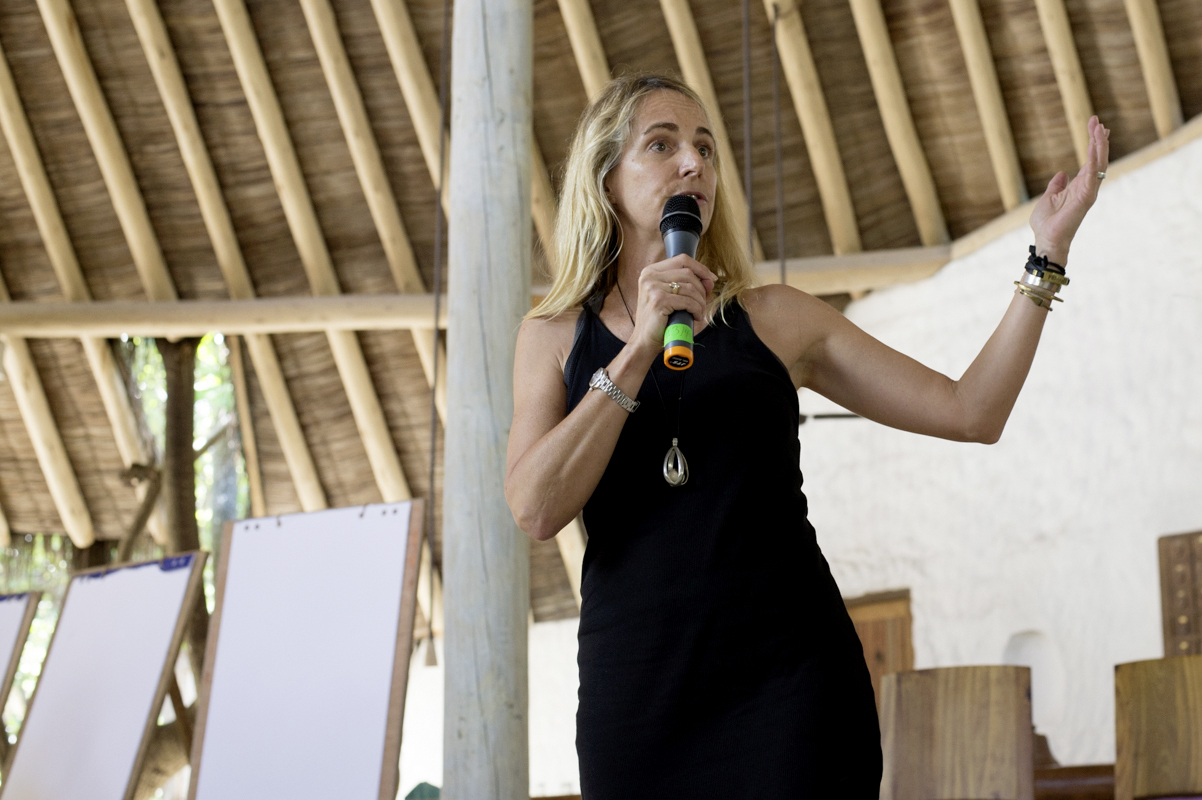
Jean Oelwang of Virgin Unite
This view was supported by Jean Oelwang, CEO Virgin Unite who spoke plainly about the need to stop duplication in philanthropy, due to activity happening in isolation, and her efforts to “convene cross sector partnerships that focus on the root causes of issues and turn them into solutions”. She also described how fractured lump sum donations mean that organisations are sticking plasters over the symptoms of the issues rather than finding long-term sustainable solutions, and therefore the symptoms keep coming back. For Jean, technology and data are some of the key drivers of future philanthropy which will empower more donors and influencers working together towards a common long-term and measurable solution. She also championed the power of celebrity and described turning it on its head and making the leaders who are driving change the celebrities.
Chris West from the Shell Foundation was transparent about his organization’s early philanthropic initiatives, which due to their fixed and project-based nature, had disappointingly low impact. Having addressed this model to an approach that instead favours long-term collaboration with social enterprises to drive scalable impact, Chris advocated that other philanthropists must also look to adopt this more flexible investment approach if they are to succeed in a sustainable, impactful and scalable way.
And it was with this in mind that delegates approached the last sessions of the day, which were focused on securing commitments to deliver actions. Nine actions were developed, including a collective pledge to support the future of sustainable fishing in the Maldives. This followed a direct request by the Maldivian Minister for Fisheries, Mohamed Shainee, to support the country’s existing sustainable fishing practices for long-term viability. Strategies outlined included a unique programme to explore the finance required to support the future conservation of the waters of Baa Atoll, which is the only UNESCO World Biosphere reserve in the Maldives and home to some of the world’s richest coral reefs and marine ecosystems. They also included exploratory discussions around the viability of ‘debt for nature swaps’ in the Maldives. The actions come as pressure grows on the Maldives to continue supporting their net-free and shark-free fishing practices, in light of competition from unsustainable fisheries, which can operate more cheaply.
Additionally, delegates committed to developing eight other post-Symposium actions, including building a sustainable Maldives fish brand, developing an ‘Oceans Lab’ to foster cross organisation collaboration on the future of the oceans, developing a nationwide plan for the Soneva Learn To Swim programme, and scaling existing sustainable rice production practices that reduce water inputs and increase yield.
The Soneva Sustainability Report 2014-15 publishes the results of Soneva’s first Total Impact Assessment. [caption id="attachment_3317" align="alignleft" width="780"] Photo: Cat Vinton[/caption] In an effort to measure the total impact the company has on the natural world and on the…... more
Soneva was announced as the winner of the prestigious Word Travel & Tourism Council (WTTC) Tourism for Tomorrow Award 2015 in the Environment category at the WTTC…... more
Participants at the 2014 SLOW LIFE Symposium. Successful initiatives such as WHOLE WORLD Water and Learn to Swim were born out of the SLOW LIFE Symposium. Following…... more